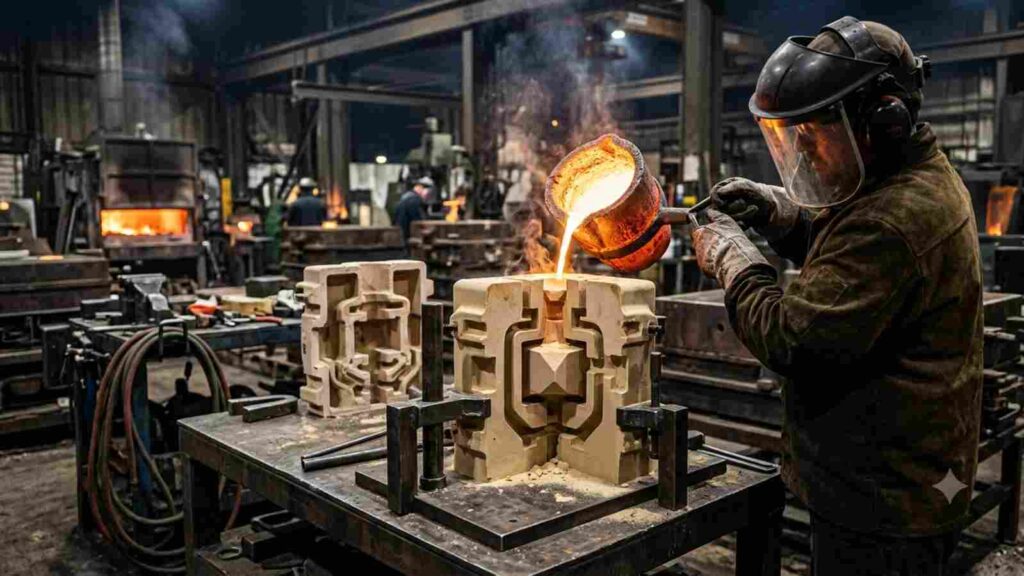
Building a prototype is exciting. Getting that same product ready for hundreds or thousands of units is a different challenge.
One of the biggest hurdles is component sourcing. A supplier who can provide parts for 10 or 20 prototypes may not be able to support a production run of 5,000 or 50,000 units.
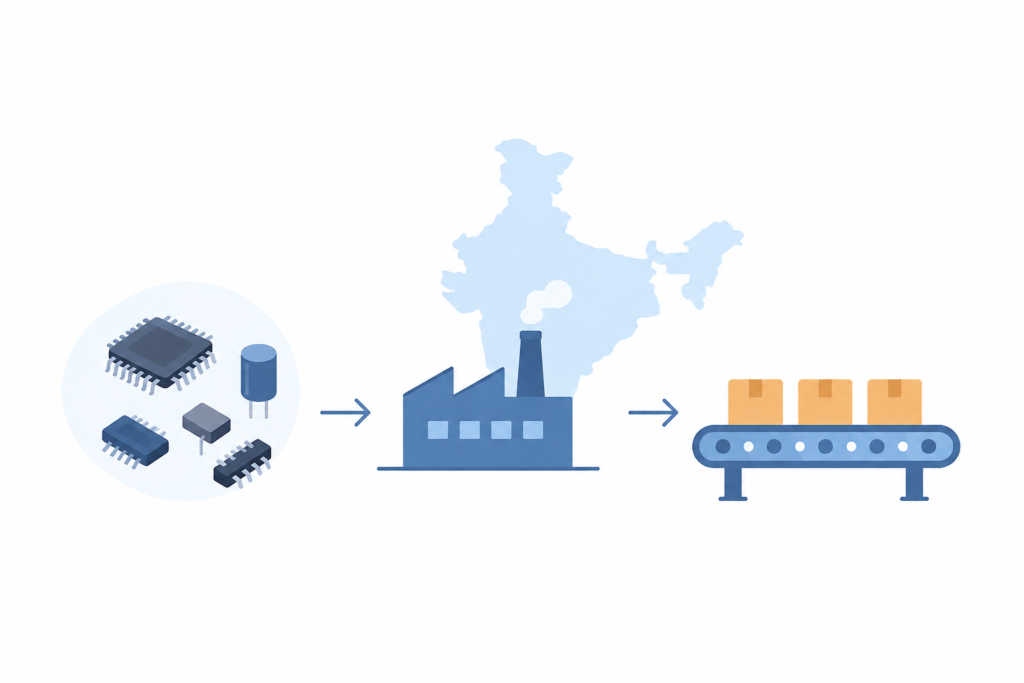
This is where a well-planned approach to manufacturing in India becomes important. Businesses need the right suppliers, predictable costs, consistent quality, and a supply chain that can grow with production.
For startups and product companies, working with a Manufacturing as a Service (MaaS) partner can also make this transition easier.
How Does Component Sourcing Work During Manufacturing in India?
Component sourcing in India starts with knowing exactly what your product needs and how much you will need at each stage of production.
A prototype usually goes through several engineering changes. Components may be replaced after testing. Specifications may also change before the product is ready for production.
Before placing large orders, the Bill of Materials (BOM) should be finalized. Each component should have a clear part number, specification, quantity, and approved supplier.
For an electronics product, the BOM may include:
- Printed circuit boards
- Semiconductors
- Resistors and capacitors
- Connectors
- Cables
- Batteries
- Enclosures
- Mechanical parts
India has been building its domestic electronics component ecosystem. The Ministry of Electronics and Information Technology (MeitY) introduced the Electronics Component Manufacturing Scheme in 2025 to support domestic production of electronic components and related sub-assemblies.
The sourcing process should become more structured as production volume increases. Prototype sourcing can be flexible. Mass production requires consistency.
How Do You Choose the Right Component Supplier in India?
The right supplier is not always the one offering the lowest price. Production capacity, quality, lead time, and reliability can have a much bigger effect on the final product cost.
A supplier should be evaluated before becoming part of your production chain. This is especially important when the component is difficult to replace.
Here are some areas worth checking:
| Factor | What to look for |
| Quality | Inspection process and quality records |
| Capacity | Ability to handle your expected volume |
| Lead time | Normal and peak production timelines |
| Pricing | Volume-based pricing and total cost |
| Reliability | Delivery history and communication |
| Compliance | Relevant Indian and industry requirements |
| Traceability | Batch and lot-level records |
For quality management, ISO 9001:2026 is the current international standard as of September 2026. It provides a framework for managing and improving a quality management system.
Product-specific requirements may also apply. The Bureau of Indian Standards (BIS) maintains a list of products covered by compulsory certification requirements in India.
A supplier review should happen before production reaches a point where changing vendors becomes expensive.
How Can You Keep Component Costs Under Control?
The easiest way to control component costs is to look beyond the quoted unit price.
A component priced at ₹100 may not actually cost ₹100 by the time it reaches your production line. Freight, packaging, tooling, inspection, taxes, inventory, and rejected parts can all affect the final cost.
It helps to compare the total landed cost for every important component.
Consider:
- Unit purchase price
- Shipping and logistics
- Tooling costs
- Packaging
- Taxes and duties
- Inspection costs
- Minimum order quantities
- Inventory costs
- Rejection and replacement costs
Production volume also changes the conversation with suppliers. A supplier may offer very different pricing for 500 units, 5,000 units, and 50,000 units.
Ask for quotations at different volumes before finalizing your sourcing plan. This gives you a better idea of how costs will change as the business grows.
Government initiatives can also influence the manufacturing ecosystem. MeitY reported cumulative production of ₹9,05,820 crore under the large-scale electronics manufacturing PLI scheme by August 2025.
The numbers do not replace supplier evaluation. They simply show the scale of India’s growing electronics manufacturing sector.
How Can You Reduce Component Supply Chain Risks?
The best way to reduce sourcing risk is to identify potential problems before they affect production.
Some components are easy to replace. Others can bring production to a stop if they become unavailable.
Pay particular attention to components that are:
- Available from only one supplier
- Imported from a single region
- Difficult to substitute
- Subject to long lead times
- Prone to price fluctuations
- Essential to your product’s core function
Having a second approved supplier can provide a useful backup. The alternative component should be tested before it is needed.
Engineering and procurement teams should work together on this. A substitute that looks identical on paper may behave differently in the finished product.
India’s electronics manufacturing ecosystem is also becoming more focused on domestic component production. The Electronics Component Manufacturing Scheme covers areas such as sub-assemblies, bare components, PCBs, and selected electronic components.
A good sourcing plan does not try to remove every risk. It identifies the risks that could stop production and prepares for them.
When Does Manufacturing as a Service Make Sense in India?
Manufacturing as a Service can be useful when a company wants to scale production without building its own complete manufacturing setup.
A MaaS partner can bring several parts of the production process together. These services may include prototyping, component sourcing, assembly, testing, quality checks, packaging, and production coordination.
This can be particularly useful for startups and smaller product companies.
Instead of managing several independent vendors, a business may work with one manufacturing partner that coordinates different parts of the process.
For example, a company moving from 100 prototypes to 5,000 production units may suddenly need more supplier capacity, better quality controls, larger purchase orders, and tighter production planning.
A MaaS model can provide access to existing manufacturing infrastructure.
When comparing MaaS companies in India, look at their actual capabilities rather than just their service list. Check their supplier network, production capacity, quality process, technical expertise, and experience with products similar to yours.
Ask how they manage BOM changes. Ask how they handle supplier failures. Ask how they inspect incoming components.
These questions can tell you much more than a general company presentation.
What Is the Best Way to Move From Prototype to Mass Production?
The transition from prototype to mass production works best when it happens in stages.
A simple approach is:
1. Validate the prototype
Test the product against its technical requirements. Identify component or design issues before committing to production volumes.
2. Finalize the BOM
Lock the approved components, specifications, quantities, and revisions.
3. Qualify suppliers
Compare suppliers based on quality, capacity, price, lead time, and reliability.
4. Run a pilot batch
Produce a controlled batch before moving directly into large-scale manufacturing. This helps identify production problems that may not appear during prototype assembly.
5. Start mass production
Increase production only after the product, suppliers, and manufacturing process have been validated.
Quality checks should continue throughout the process. ISO 9001:2026 provides a framework for quality management systems. BIS requirements may also apply to specific products sold or manufactured in India.
It is also useful to track simple production metrics. These can include supplier lead time, rejection rate, delivery performance, production yield, and component cost.
The goal is simple. Your production process should be able to grow without creating new problems every time the order quantity increases.
FAQs About Component Sourcing and Manufacturing in India
What is Manufacturing as a Service in India?
Manufacturing as a Service is a model where companies use an external manufacturing partner for some or all of their production needs. Services can include component sourcing, assembly, testing, quality control, packaging, and production coordination.
How do I find reliable component suppliers in India?
Start by identifying suppliers that can meet your technical requirements and expected production volume. Check their quality systems, capacity, lead times, certifications, references, and delivery history before placing large orders.
How can startups reduce manufacturing costs in India?
Startups can compare multiple suppliers, negotiate based on realistic production volumes, reduce unnecessary BOM variations, and use existing manufacturing infrastructure instead of investing in a complete factory too early.
What is the difference between contract manufacturing and MaaS?
Contract manufacturing usually involves outsourcing the production of a defined product or assembly. Manufacturing as a Service can cover a wider set of activities, including sourcing, production coordination, testing, quality control, and logistics.
What should I ask a manufacturing partner before starting production?
Ask about production capacity, supplier management, quality checks, lead times, BOM control, minimum order quantities, pilot production, certifications, and how production issues are handled.
Is India suitable for scaling a product from prototype to mass production?
India has a large and growing manufacturing ecosystem across electronics, automotive, engineering, textiles, pharmaceuticals, and other industries. The suitability of a specific manufacturing partner depends on the product, required volume, technical specifications, quality requirements, and supply-chain needs.
Make the Move From Prototype to Production With VENTTUP
Moving from a prototype to mass production involves more than finding a supplier. It requires coordination between engineering, sourcing, manufacturing, quality, and logistics.
VENTTUP can help businesses approach this transition with a structured manufacturing process. If you are developing a new product or preparing an existing prototype for larger production volumes, the next step is to discuss your requirements and production goals.
Talk to VENTTUP about your manufacturing requirements and plan your next production stage.