The Situation
A mid-sized engineering company approached us with a clear challenge.
They were manufacturing critical components including:
- Small shafts
- Quench rods
- Switch rods & heads
- 33kV pipe axis components
These parts were essential for their equipment functionality. The problem?
Development delays and rising production costs were affecting their timelines.
Their internal team was struggling with:
- Prototype inconsistencies
- Slow machining turnaround
- Vendor coordination issues
- Cost pressure during development phase
They needed a reliable machining partner fast.
What Was at Stake?
For B2B manufacturers, component delays are not small issues.
When precision parts are delayed:
- Assembly timelines shift
- Client commitments get impacted
- Cost overruns increase
- Reputation takes a hit
They weren’t just looking for a vendor.
They needed a technical solution partner.
Our Approach
Instead of jumping straight into production, we followed a structured process:
1️ Requirement Deep Dive
We studied:
- Design specifications
- Tolerance requirements
- Application functionality
- Load and durability expectations
2️ Sample Development
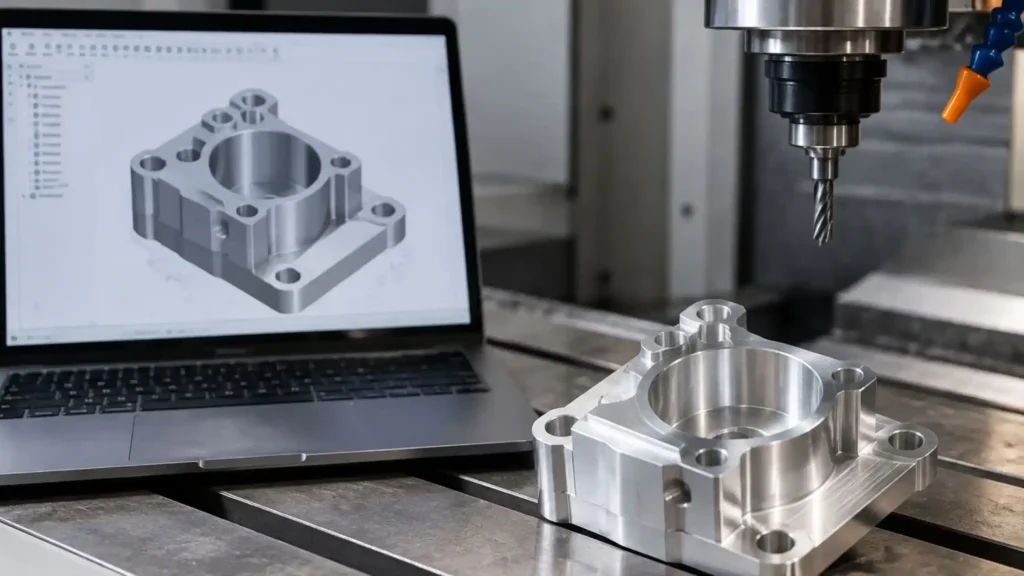
Prototypes were developed as per exact design specs.
Every dimension was verified before approval.
3️ Controlled Machining Process
- Precision machining through experienced manufacturing partners
- Strict quality checkpoints
- Delivery aligned to development milestones
No shortcuts. No rework cycles.
The Result
Here’s what changed after implementation:
Faster Turnaround
Production delays were eliminated during development.
17% Cost Savings
Optimised machining strategy reduced unnecessary processing and material wastage.
100% Quality Assurance
All components met functional and dimensional standards.
Long-Term Vendor Stability
The client now has a structured sourcing model instead of reactive procurement.
Why This Matters for B2B Manufacturers
If you are:
- A manufacturing company
- An industrial equipment builder
- A power infrastructure contractor
- An OEM requiring precision components
Then you already know:
Machining is not just about cutting metal. It’s about protecting timelines and margins.
Delays in shafts, rods, pins, or custom mechanical components can quietly increase project cost by 10–20%.
Common Machining Problems Businesses Face
- Inconsistent tolerances
- Vendor dependency on single machine capability
- Delayed prototype approvals
- High development scrap rates
- Communication gaps between design and production
Sound familiar?
What Makes a Machining Partner Reliable?
From this project, three things proved critical:
- Engineering-first approach (not sales-first)
- Structured sample validation
- Transparent production timelines
When these three align, cost control becomes natural.
Final Takeaway
This project proves one simple thing:
The right machining strategy doesn’t just manufacture parts — it protects profit.
If your business depends on precision components and you’re facing cost pressure or development delays, it might be time to rethink your machining process.