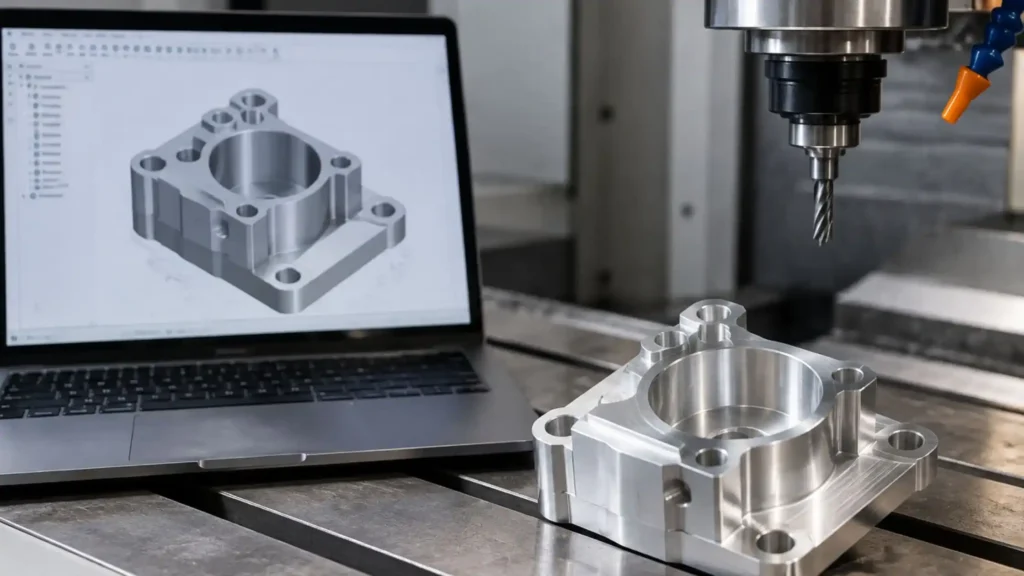
For OEMs, moving a CNC-machined part from prototype to serial production is not simply a matter of increasing the order quantity. It requires a controlled transition from design validation to repeatable manufacturing—covering machining strategy, material traceability, inspection, process capability, and supply reliability.
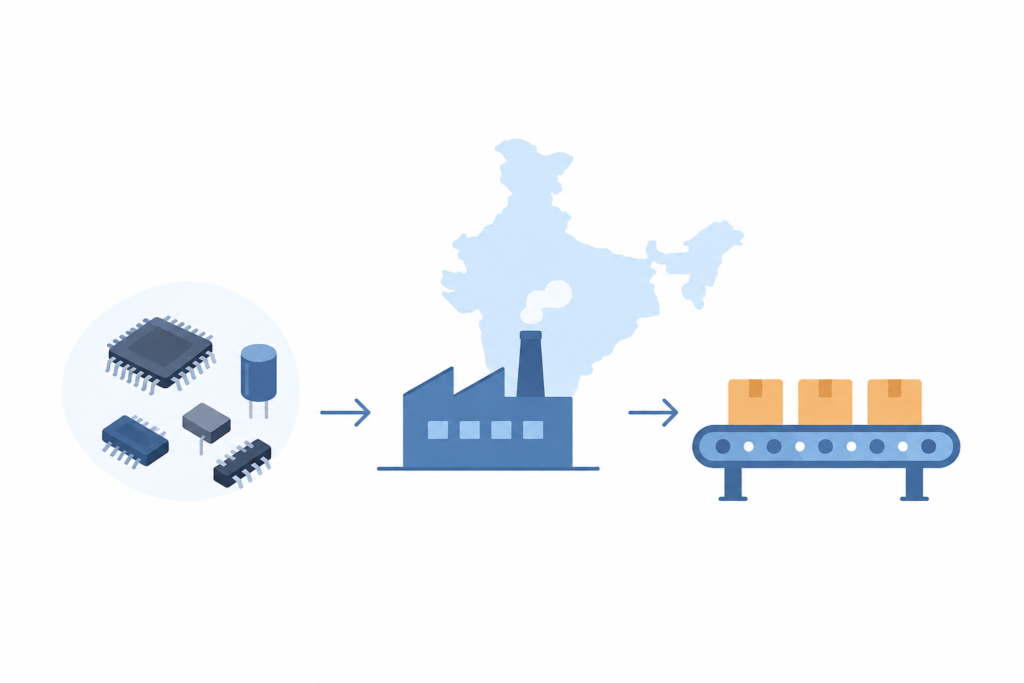
India has become a strong destination for outsourced precision CNC machining because it combines engineering capability, competitive production economics, and growing supplier ecosystems. A structured framework helps buyers capture those advantages without exposing their program to quality or lead-time risk. Industry estimates place India’s CNC services market at about USD 2.20 billion in 2026, with roughly 12% annual growth.[kamrit]
Why Prototype-to-Production Fails
Many CNC programs encounter problems not during prototyping, but when volumes increase. A part that performs well as a one-off sample may become difficult to manufacture consistently if tolerances, fixturing, material availability, or inspection requirements were not planned early.
Common failure points include:
- Tolerances that are tighter than the part function requires
- Designs that depend on difficult-to-hold features or thin walls
- No clear definition of critical-to-quality dimensions
- Material substitutions or incomplete traceability
- Inspection methods that do not match the drawing requirements
- A supplier capable of prototypes but not stable serial production
- No documented process for tool changes, setup approval, or corrective action
The goal is therefore not only to make a good first part, but to build a process that can make the same part repeatedly.
The Five-Stage Scaling Framework
1. Design for CNC Machining
Design for manufacturability should begin before an RFQ is sent. At this stage, engineering and manufacturing teams should review the CAD model and 2D drawing together to identify features that may increase machining time, tooling complexity, or rejection risk.
Key review areas include:
- Tolerance strategy: Apply tight tolerances only to functional surfaces, mating features, bearings, shafts, bores, and alignment-critical locations.
- Geometric dimensioning and tolerancing: Define flatness, perpendicularity, concentricity, true position, and profile requirements where assembly performance depends on them.
- Feature accessibility: Confirm that pockets, deep bores, undercuts, and internal threads can be reached with standard or feasible tooling.
- Wall thickness and rigidity: Thin sections may distort during machining or clamping.
- Surface finish: Specify Ra values only where sealing, friction, appearance, or fatigue performance requires them.
- Material selection: Balance mechanical performance, machinability, corrosion resistance, cost, and availability.
A well-prepared drawing reduces quotation ambiguity and prevents later disputes over what constitutes an acceptable part.
2. Select the Right Machining Route
The correct CNC process depends on part geometry, material, volume, tolerance, and surface-finish requirements.
| Requirement | Suitable CNC approach |
| Rotational parts, shafts, bushings, fittings | CNC turning |
| Prismatic parts, housings, brackets, manifolds | CNC milling |
| Complex multi-face geometry | 4-axis or 5-axis machining |
| High-precision bores and concentric features | Turn-mill or precision grinding where required |
| Low-volume validation | 3-axis machining with simplified fixturing |
| Serial production | Dedicated fixtures, proven tooling, and standardized programs |
For complex aerospace, defense, medical, or EV components, 5-axis machining can reduce setups and improve accuracy by machining multiple faces in a single operation. However, it should be selected for functional need—not used as a default premium option.
3. Validate the Prototype With Production Intent
A prototype should not only prove that the design works; it should also test whether the part can be manufactured consistently.
At this stage, the supplier and customer should agree on:
- Material grade, condition, and certification requirements
- Critical dimensions and inspection methods
- Surface-finish and cosmetic requirements
- Heat treatment, plating, anodizing, passivation, or coating requirements
- First Article Inspection scope
- Packaging, marking, and traceability requirements
- Expected production volume and reorder frequency
First Article Inspection verifies that the first production-representative parts conform to the drawing and agreed inspection requirements. For automotive and other formal approval environments, PPAP may also be required; it goes beyond dimensional inspection to include process-flow documentation, control plans, measurement-system evidence, and process-capability studies.[batnon][ruijin-cnc][chinamachiningsolutions]
4. Build Quality Into Serial Production
Quality control should be planned as part of the manufacturing process, not added after parts are completed. A practical CNC quality system usually includes material verification, first-article approval, in-process checks, final inspection, and documentation.[batnon][ntmetals]
A strong production-quality plan should define:
- Incoming material checks: Verify mill certificates, heat numbers, alloy grade, and material condition.
- Setup approval: Inspect the first part after every setup, tool change, or program revision.
- In-process inspection: Monitor critical dimensions during production so drift is detected before an entire batch is affected.[ntmetals][protolabs]
- Final inspection: Measure finished parts against the drawing using calibrated instruments or CMM inspection where required.[cnc-fabricate]
- Traceability: Link parts to material lots, machining records, inspection results, and shipment documentation.
- Corrective action: Define how nonconformances are identified, contained, analyzed, and prevented from recurring.
For regulated industries, documentation is as important as the physical part. FAI reports, dimensional reports, material certificates, and certificates of conformity help demonstrate that the delivered components meet the released specification.[super-ingenuity][cuttingindustries.co]
5. Plan Capacity, Lead Time, and Supply Resilience
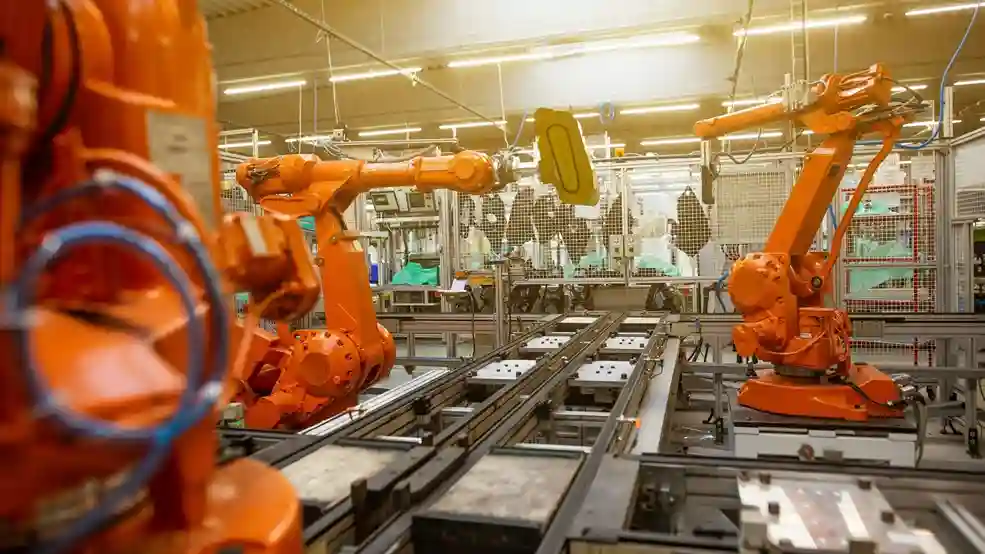
Serial production introduces a new risk: dependency on one machine, one operator, one fixture, or one supplier. Buyers should assess whether the CNC partner can maintain quality while scaling output.
Important questions include:
- Can the supplier handle repeat orders without long setup delays?
- Are critical fixtures, tools, and CNC programs retained securely?
- Is there a defined lead time for standard and expedited orders?
- Can alternative machines or approved sub-suppliers support capacity peaks?
- Are raw materials available consistently, or should safety stock be planned?
- Is there a clear escalation process for quality or delivery issues?
- Can the supplier support component localization or multi-location sourcing if required?
For OEMs building resilient supply chains, the best CNC partner is not necessarily the lowest-quote supplier. It is the one that can demonstrate process control, documentation discipline, capacity flexibility, and engineering support across the product lifecycle.
RFQ Checklist for Production-Ready CNC Parts
To receive accurate quotations and avoid delays, share the following with your CNC machining partner:
- 3D CAD file in STEP, IGES, or native format
- 2D drawing with tolerances, GD&T, surface finish, and revision number
- Material specification, including grade, condition, and certification requirement
- Quantity for prototype, pilot lot, and annual production volume
- Required delivery schedule and target lead time
- Heat treatment, surface treatment, and finishing requirements
- Critical-to-quality dimensions and inspection requirements
- FAI, PPAP, CoC, material certificate, or traceability requirements
- Packaging, labeling, and shipment instructions
- Target unit cost, if available
- Assembly or functional context for critical features
Clear RFQ information helps a manufacturing partner identify the right process, fixture strategy, inspection plan, and production approach before quoting.
How a Manufacturing-as-a-Service Partner Adds Value
A CNC machining service provider should act as more than a job shop. For OEMs scaling precision components, the most valuable partners provide engineering feedback, supplier coordination, quality oversight, and production planning.
A manufacturing-as-a-service model can support this transition by:
- Matching the project with suitable CNC machining capabilities
- Reviewing drawings for manufacturability and cost reduction
- Coordinating machining, finishing, inspection, and delivery
- Managing supplier communication and quality documentation
- Supporting prototype iterations and production handover
- Helping OEMs localize components and reduce single-source dependency
This approach is particularly useful for startups and mid-size OEMs that need engineering-grade precision parts but do not want to build and manage an entire supplier network internally.
Final Takeaway
Scaling CNC components from prototype to serial production requires a disciplined framework: design for manufacturability, validate with production intent, control quality throughout the process, and plan capacity before volumes rise.
For buyers seeking CNC machining services in India, the most reliable outcome comes from choosing a partner that can support the complete journey—engineering review, precision machining, inspection, documentation, and repeatable production supply. First Article Inspection, in-process checks, CMM-based dimensional verification, and formal PPAP documentation are essential tools for ensuring that production parts remain consistent as volumes grow.[ruijin-cnc][protolabs][cnc-fabricate]