A wrong casting supplier costs you more than one bad batch. You lose weeks on rework, you pay for tooling twice, and your own delivery dates slip.
The hard part is that most sand casting companies in India will say yes to almost any drawing you send. A yes is easy to give. This checklist shows you what to check, what a good answer sounds like, and when to walk away.
1. Start with your own requirements
A supplier can only quote well if your inputs are clear. Before you contact anyone, keep these ready:
- 2D drawing and, if you have it, a 3D CAD model
- Material grade
- Finished weight and overall size
- Critical dimensions and tolerances
- Quantity: samples, first batch, and yearly demand
- Testing and documents you need
If any of these are missing, quotes will come back with different assumptions and you cannot compare them.
2. Check the technical fit
A foundry experienced in producing small 5 kg pump components may not be equipped to handle a much larger 400 kg housing. Ask for the weight and size range the foundry handles daily, not the largest part it has ever made.
Also ask which moulding process they will use for your part. The two common ones are:
Green sand | No-bake (resin sand) | |
How the mould is held | Clay and water | Chemical binder |
Best for | Small to medium parts | Medium to large, heavy parts |
Volume | Medium to high | Low to medium |
Speed | Fast | Slower |
Accuracy and finish | Good | Better |
Cost per piece | Lower | Higher |
Good sand casting manufacturers will review your drawing and point out problems before quoting. Thin walls, sharp corners and missing draft angles are the usual ones. If a supplier has no questions at all, treat that as a warning.
3. Check material experience
Every alloy behaves differently when it melts, pours and cools. Pick a foundry that casts your grade every week, not one that will try it for the first time on your order.
Common grades you will see in India:
- Grey iron: FG 200, FG 260 (IS 210)
- SG (ductile) iron: SG 400/15, SG 500/7 (IS 1865)
- Aluminium: LM6, LM25
- Steel: carbon and alloy steel castings (IS 1030 and similar)
Ask two simple questions. Do you have a spectrometer to check chemistry for every heat? Can you give a material test certificate with each batch? Both answers should be yes.
4. Check quality control
Sand casting is not a high-precision process, so set fair expectations. Casting tolerances are defined in ISO 8062, and machine-moulded sand castings usually fall around CT8 to CT12. Hand-moulded parts are looser. The surface is rough, typically Ra 6.3 to 25 microns. Any tighter feature needs machining.
Ask the supplier how they find these defects before dispatch:
- Porosity and shrinkage
- Cracks
- Sand inclusions
- Dimensional errors
The test methods should match the part:
- Visual and dimensional checks for every order
- Hardness and tensile tests for mechanical properties
- Dye penetrant or magnetic particle testing for surface cracks
- Ultrasonic or radiography testing for internal defects
On certificates, ISO 9001 is the basic one. Automotive buyers usually need IATF 16949, and aerospace buyers need AS9100. Always ask for a copy and check the validity date. If testing is done outside, ask if the lab is NABL accredited.
5. Check capacity and lead time
Share your full volume plan, not just the first order. A foundry that handles 50 pieces well may fail at 2,000 pieces a month.
For lead time, ask for a stage-wise split: pattern, samples, approval, and bulk production. As a rough guide, a new pattern takes two to six weeks, and first samples follow a few weeks later. Wooden patterns are quicker. Metal patterns with many cores take longer.
A single date with no stage-wise plan is hard to trust and hard to track.
6. Settle patterns and tooling early
Tooling causes more disputes than any other item. Get these points in writing before you pay:
- Material: wood suits low volumes; aluminium or steel lasts longer for repeat orders
- Ownership: if you pay for the pattern, it should belong to you
- Storage and upkeep: who keeps it and who repairs it
- Changes: what a design change will cost
- Transfer: can you move the pattern to another foundry if needed
7. Compare quotes line by line
The lowest quote is often the one that leaves things out. Ask every supplier to price the same items.
| Cost item | What to confirm |
| Raw material | Exact grade, and how price changes with metal rates |
| Pattern and tooling | One-time cost and change charges |
| Casting | Price per kg or per piece |
| Fettling and finishing | Shot blasting, painting, coating |
| Heat treatment | Included or extra |
| Machining | Which features, and to what tolerance |
| Inspection | Tests and reports included |
| Packing and freight | Ex-works or delivered, and export packing |
Some sand casting manufacturers quote only the raw casting. Check this first, because machining and testing can change the final price a lot.
Take a simple example. A buyer gets two quotes for the same SG iron bracket. Quote A is cheaper per piece, but it covers only the raw casting. Quote B includes machining, a material test certificate and export packing. Once the buyer adds those items to Quote A, it becomes the costlier option. This happens often, and a line-by-line comparison is the only way to catch it.
8. Know where the foundries are
India’s foundries are grouped in clusters, and each cluster is known for certain work. This helps you shortlist faster.
- Coimbatore: pump, motor and automotive castings
- Rajkot: engine and machine tool castings
- Kolhapur and Belgaum: automotive castings
- Howrah: municipal and railway castings
- Punjab (Batala, Ludhiana): machine tool and agricultural parts
Most sand casting manufacturers in India are small and mid-sized units. Many are very good at one type of part and weak outside it. So match the foundry to your part, not only to your budget.
9. Red flags to watch for
Walk away, or at least slow down, if you see these:
- No questions about your drawing
- A price far below every other quote
- No in-house chemistry check
- No sample inspection reports to show
- Unclear answer on who owns the pattern
- Refusal to allow a plant visit or audit
- A delivery date with no stage-wise plan
Not sure about a supplier you are already talking to? Send us your drawing and we will give you a second opinion on feasibility and cost.
How Venttup helps
Doing all these checks across several foundries takes time, especially if you are buying from outside India. Venttup does this work for you.
We work with partner foundries across India for sand, investment and pressure die casting. Before receiving an order, every supplier must complete a pre-qualification audit. Our GATE process covers feasibility, supplier selection, pilot production and testing before mass production starts. The process includes design reviews and quality checks.
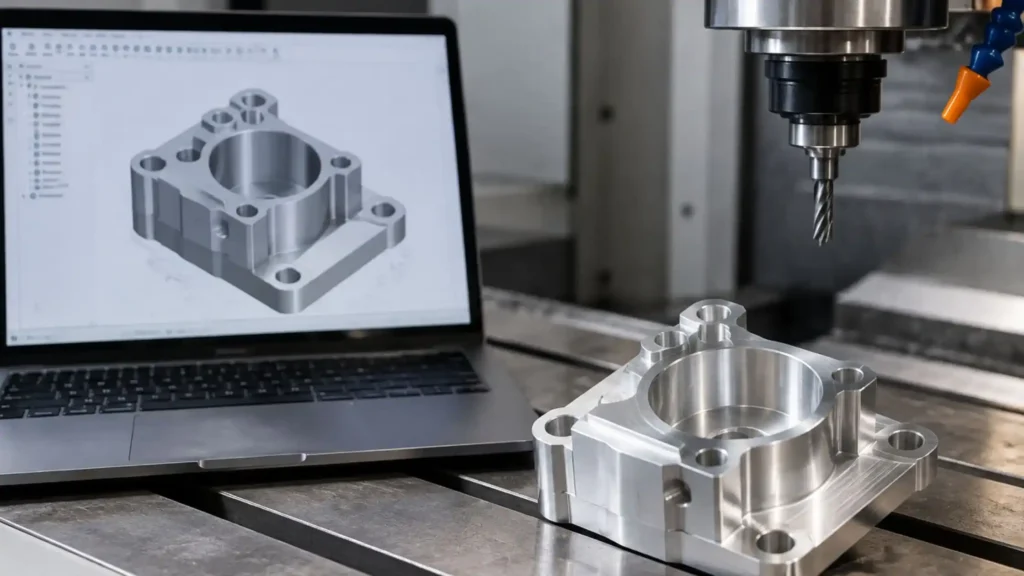
You get sand casting services, CNC machining and inspection through one contact. If you only have an old sample and no drawing, our reverse engineering team can recreate it.
Key takeaways
- Send complete inputs. Clear drawings and quantities get you comparable quotes.
- Match the foundry to your part’s size, weight, alloy and volume.
- Expect CT8 to CT12 tolerances from sand casting. Plan machining for anything tighter.
- Ask for material and inspection reports with every batch.
- Clarify ownership of the design and patterns before making any payment.
- Compare quotes item by item, not by the total.
- Start with samples and judge the supplier on them before bulk orders.
Conclusion
Price matters, but it should be the last thing you compare. Check fit, material, quality, tooling and delivery first. Then start small, test the samples, and scale up only when the results are steady.
If you would like a shorter route through the many sand casting companies in India, share your drawing with Venttup. We will check feasibility and come back with a quote from a qualified foundry.
FAQs
1. Can sand casting make complex shapes?
Yes. Sand cores form hollow sections and internal passages. Very thin walls and tiny details are harder, so get the design reviewed first.
2. What is the difference between green sand and no-bake casting?
Green sand uses clay and water to hold the mould. It is fast and cheap for volume work. No-bake uses a chemical binder. It is slower but suits larger parts and gives better accuracy.
3. Can a part be made if it is no longer available in the market?
Yes. An old sample can be scanned and measured to create a new drawing and pattern. This is common for spares of old machines.
4. Can a supplier work from a 3D CAD model?
Yes. Most foundries use the model to design the pattern and cores. Still send a 2D drawing, because it carries the tolerances and material notes.
5. Can sand casting be combined with CNC machining?
Yes, and it usually is. The casting gives the shape, and machining finishes the faces, bores and threads. Many sand casting services include machining, so you receive a ready-to-fit part.