One question comes up repeatedly from businesses sourcing CNC parts from India:
Should you go with a low-volume CNC machining manufacturer or a high-volume one?
The answer depends on your product stage, monthly quantity, and budget. This guide explains both options with real numbers – so you can make the right call for your business.
What Is CNC Machining?
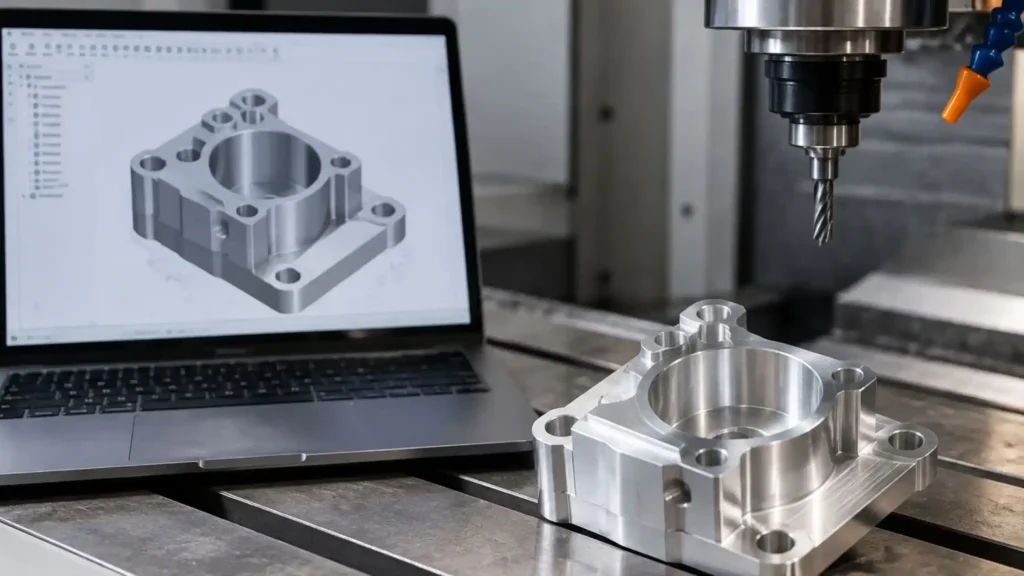
CNC machining (Computer Numerical Control machining) is a process where computer-controlled machines cut, drill, and shape metal or plastic parts to precise dimensions.
Modern CNC machines hold tolerances as tight as ±0.005 mm. This level of precision is why aerospace, defense, automotive, and medical equipment industries depend on CNC machining – even a small error in these sectors causes serious problems.
India’s CNC machining sector has grown sharply over the past decade:
- India’s manufacturing sector is projected to reach USD 1 trillion by 2026, up from USD 447 billion in 2021 (IBEF, 2023)
- Growth is driven by rising demand from the automotive, EV, and renewable energy industries
- CNC processes widely used in India include 3-axis milling, 5-axis milling, CNC turning, and turn-mill operations
- Machines from DMG Mori, Mazak, and Haas are used by Indian manufacturers for both prototype and production work
What Is Low-Volume CNC Machining?
Low-volume CNC machining means producing a small number of parts – typically between 10 and 5,000 units per production run.
This method is used when a product is still being tested or refined. The goal is to make enough parts to check the design, verify performance, and confirm quality before committing to large-scale manufacturing.
Low-volume production is commonly used in three situations:
- A company developing a new product needs physical prototypes for testing and customer approval
- An existing product needs a design change and only a small updated batch is required before re-launching
- Demand for the product is consistent but small – making mass production economically unjustified
Low-volume CNC machining is widely used by businesses that need precision parts in smaller quantities. Large OEMs and Tier 1 automotive and aerospace suppliers also use low-volume runs for new component development before scaling volumes.
What Are the Advantages of Low-Volume CNC Machining?
Low-volume CNC machining gives businesses four key advantages over committing to large production runs too early.
Design changes are fast and affordable.
Tooling investments in low-volume runs are minimal. A design revision costs ₹5,000 to ₹20,000 in a low-volume run. The same change can cost ₹5 lakh or more after a high-volume production setup is locked in.
Lead times are short.
Most low-volume CNC jobs are completed in 5 to 15 working days – depending on part complexity, material, and number of setups. This speed is critical for tight product launch deadlines.
Starting investment is low.
Standard CNC machines handle low-volume jobs without expensive custom moulds or dedicated fixtures. Businesses can start production with much less capital tied up upfront.
Risk is caught early.
A design flaw found after 100 parts costs far less to fix than one found after 10,000. Low-volume runs act as a quality gate before large financial commitments are made.
What Is High-Volume CNC Machining?
High-volume CNC machining means producing large quantities of the same part – typically 5,000 units and above – repeatedly and consistently over time.
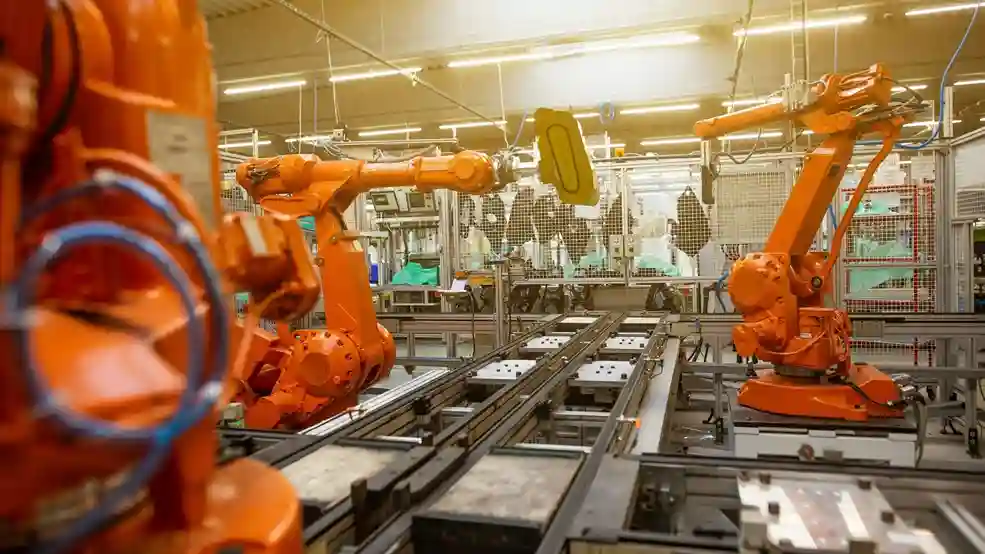
The priority in high-volume production is speed, repeatability, and lower cost per unit. Once a design is locked and production is set up, the same part is made continuously with automated quality checks at each stage.
Equipment used in high-volume CNC production in India:
- Multi-axis CNC machines (4-axis and 5-axis VMCs)
- Bar feeders and robotic part-loading systems
- CMM (Coordinate Measuring Machine) automated inspection systems
- Pallet changers for uninterrupted multi-part production
Indian manufacturers producing automotive parts – gearbox housings, brake calipers, and engine brackets – typically run monthly outputs of 10,000 to 100,000 units per part number. These operations are often IATF 16949 certified, which is the quality standard required by global automotive OEMs.
What Are the Benefits of High-Volume CNC Machining
High-volume CNC machining gives businesses four core advantages when production demand is stable and predictable.
Unit cost drops sharply with volume.
Setup cost is spread across a large number of parts. A part that costs ₹800 per unit at 500 pieces may cost ₹180 to ₹220 per unit at 20,000 pieces – a reduction of 70 to 75 percent.
Quality is consistent across every batch.
Automated processes remove the variability of manual handling. Every part follows the same machining path, tooling, and CMM inspection routine. Cpk process capability values of 1.33 or higher are standard in well-run high-volume CNC operations.
Repeat orders are fulfilled faster.
Once a production line is set up for a specific part number, re-orders need no new programming or fixture setup. Turnaround on repeat batches is significantly faster than the first run.
Output scales with demand.
As monthly demand grows from 5,000 to 50,000 units, a high-volume CNC manufacturer adds machine shifts or extends production time on existing equipment — without changing the supplier.
Low-Volume vs High-Volume CNC Machining: Key Differences
| Factor | Low-volume CNC machining | High-volume CNC machining |
|---|---|---|
| Typical quantity | 10 – 5,000 units per run | 5,000 – 100,000+ units per run |
| Cost per unit | Higher | Lower |
| Initial setup cost | Low — standard tooling | High — fixtures and dedicated setup |
| Design flexibility | High — changes between runs are easy | Low — changes after setup are costly |
| Lead time | 5 – 15 working days | Fixed repeat delivery schedule |
| Tooling investment | Minimal | Significant upfront |
| Best suited for | Prototypes, R&D, custom components | Mass production, stable monthly demand |
| Certification needed | ISO 9001:2015 or AS9100D | IATF 16949 for automotive |
| Inspection method | Manual gauging plus CMM spot-checks | Automated CMM inspection every batch |
Which Industries Use Low-Volume CNC Machining in India?
Low-volume CNC machining is used across four main industry groups where parts are specialised, quantities are limited, or designs are still being refined.
Aerospace and defense
- Indian aerospace suppliers work under DGCA approval and AS9100D certification
- Typical batch sizes: 50 to 500 units
- Tolerances on structural components can be as tight as ±0.01 mm
- Surface roughness requirements are often Ra 0.8 µm or better
Medical devices
- Surgical instruments, bone implant components, and diagnostic equipment parts
- Quality standard: ISO 13485
- Common materials: titanium Grade 5, SS316L, and PEEK
- Dimensional control is strict – out-of-spec medical parts cannot be reworked
Electric vehicle development
- India’s EV sector is expanding fast with new component developers entering the market
- Typical start volumes: 200 to 1,000 units for battery housing brackets, motor end caps, and inverter enclosures
- Low-volume runs let teams validate design and fitment before tooling for scale
Industrial automation and robotics
- Custom end-effectors, robotic arm components, jigs, and fixtures
- Typical batch sizes: 10 to 200 units per build
- Each part is specific to a production line layout or machinery specification
Which Industries Use High-Volume CNC Machining in India?
High-volume CNC machining is used in industries where monthly demand is large, consistent, and tied to predictable production schedules.
Automotive
- Components: crankshaft flanges, connecting rod caps, transmission housings, brake disc hubs
- Production volumes: 30,000 to 100,000 units per month
- Major manufacturing clusters: Pune, Chennai, and Gurugram
- Certification required: IATF 16949
Railways and metro infrastructure
- Components: axle boxes, bogie side frames, coupling bodies, brake rigging parts
- Standards followed: IRS and EN 13749
- Monthly volumes often exceed 10,000 units per part number
Renewable energy
- Components: wind turbine pitch bearing housings, solar tracker pivot arms, generator shaft couplings
- India added 15.5 GW of renewable energy in FY2023 (Ministry of New and Renewable Energy, 2023)
- Steady demand for machined structural components across Maharashtra, Rajasthan, and Tamil Nadu
Export manufacturing under China+1
- Indian CNC manufacturers now supply directly to Germany, US, Japan, and South Korea
- After 2020-2021 disruptions, many global buyers moved 20 to 40 percent of sourcing from China to India
- Minimum requirement: ISO 9001:2015 or IATF 16949 certification
When Should You Choose Low-Volume CNC Machining?
Low-volume CNC machining is the right choice when five or more of these conditions apply to your situation:
- Your product design is not yet finalised – engineering changes are still happening
- You need physical parts for testing, customer approval, or regulatory sign-off
- Your monthly demand is under 3,000 units
- You need custom or application-specific components for a specific machine or production line
- Your timeline is under three weeks – aluminum 6061 or SS304 parts are regularly delivered in 5 to 12 working days
- You are entering a new market and want to limit financial exposure before demand is confirmed
When Should You Choose High-Volume CNC Machining?
High-volume CNC machining is the right choice when all of these conditions are true for your business:
- Your product design is locked for at least 12 to 24 months – no major dimensional changes expected
- Monthly demand is consistent at 5,000 units or more
- Unit cost is a competitive factor – the difference between ₹800 and ₹200 per unit directly affects your margin
- Your buyers require ISO 9001:2015 or IATF 16949 certification with Cpk data per shipment
- You need scheduled, reliable delivery on a fixed production calendar
Why Are Global Businesses Choosing CNC Machining Manufacturers in India?
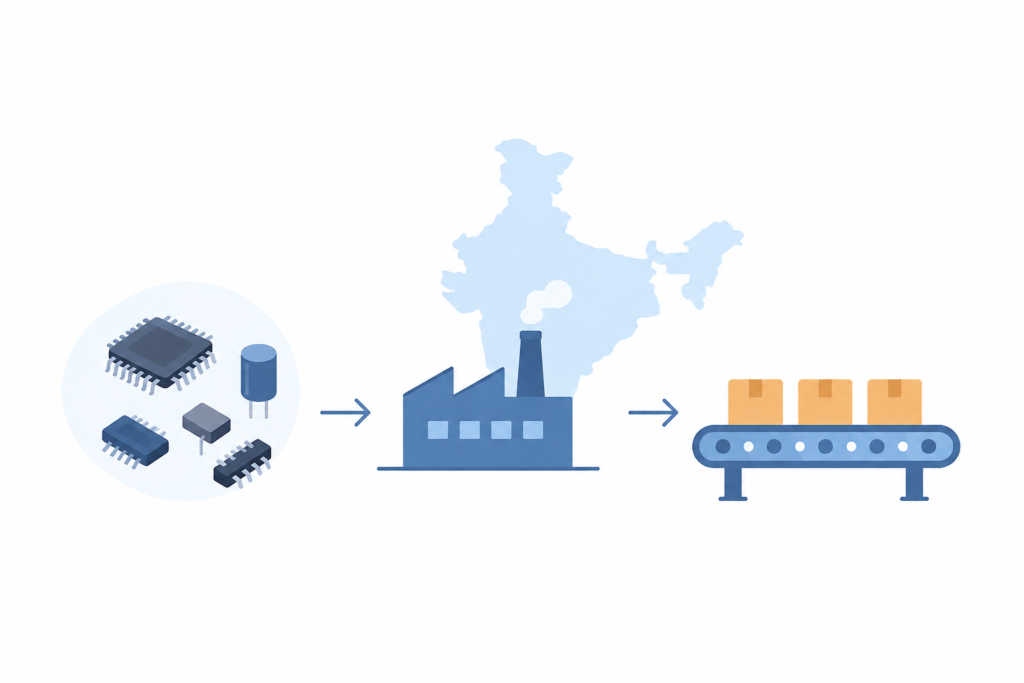
India offers a mix of cost, capability, and certification that very few countries match at the same price point.
Cost advantage
- CNC machining in India costs 30 to 50 percent less than equivalent work in Germany, the US, or Japan
- An aluminum 6061 part costing USD 12 per unit in Germany often costs USD 5 to USD 7 from a comparable Indian manufacturer – same tolerances, same surface finish
Engineering talent
- India produces over 1.5 million engineering graduates annually (AICTE, 2023)
- Indian CNC programmers work with Siemens NX, Mastercam, and Hypermill – the same CAM software used in Germany and Japan
Modern equipment
- Leading Indian CNC shops run 5-axis VMCs, Swiss-type turning centres, and HMCs from DMG Mori, Mazak, Haas, and Doosan
- These are the same machine platforms used by Tier 1 manufacturers globally
Export-grade certifications
- Indian manufacturers certified to ISO 9001:2015, AS9100D, IATF 16949, and ISO 13485 supply components to companies in over 30 countries
- Export volume from India’s engineering goods sector reached USD 107.3 billion in FY2023 (Ministry of Commerce, 2023)
Government investment
- The PLI (Production Linked Incentive) scheme has increased precision machining investment across Maharashtra, Gujarat, Tamil Nadu, Telangana, and Karnataka
- These five states handle the majority of India’s precision engineering exports
How Do You Choose the Right CNC Machining Manufacturer in India?
Choosing the right manufacturer comes down to five specific checks. Each one filters out a different category of risk.
Does the manufacturer have the machines your part needs?
Match machine capability to part requirements before anything else:
- 5-axis VMC – required for parts with complex curved surfaces or undercuts
- CNC turning centre – handles cylindrical and rotational parts
- Swiss-type CNC lathe – used for small-diameter, long, high-precision turned parts
- HMC (Horizontal Machining Centre) – ideal for high-volume prismatic parts with multiple faces
Ask for a machine list with spindle specifications and axis configurations before agreeing to work together.
What quality certifications does the manufacturer hold?
- ISO 9001:2015 – baseline for general industrial parts
- AS9100D – required for aerospace and defense components
- IATF 16949 – required for automotive OEM supply chains
- ISO 13485 – required for medical device components
A manufacturer without the right certification for your industry is a quality and supply chain risk – especially in regulated sectors.
What inspection equipment is on the shop floor?
A capable CNC machining shop should have:
- A temperature-controlled CMM room with a Zeiss, Hexagon, or Mitutoyo CMM
- A profilometer (Mitutoyo SJ-210 or equivalent) for surface roughness measurement
- Calibrated bore gauges, micrometers, and pin gauges traceable to NABL-accredited standards
Manufacturers who rely only on manual gauging cannot consistently verify tight tolerances across large production batches.
Can the manufacturer work with the material your part needs?
Common materials available at most Indian CNC shops:
- Aluminum 6061-T6 and 7075-T651
- Stainless steel SS304 and SS316L
- Mild steel IS2062
- Brass CuZn39Pb3 and copper C11000
Specialty materials that need confirmed capability:
- Titanium Grade 5 (Ti-6Al-4V) – requires carbide tooling and high-pressure coolant
- Inconel 718 and Hastelloy C276 – slow cutting speeds and frequent tool changes
- PEEK and Delrin (POM) – needs diamond-coated tooling and controlled temperatures
- Ultem (PEI) – strict chip clearance and coolant control required
Can the manufacturer scale as your volumes grow?
Ask these three specific questions before signing a long-term agreement:
- What is current machine capacity utilisation? (Shops running above 85 percent have limited growth room)
- What equipment additions are planned in the next 12 months?
- Can the supplier add a second or third shift on the machines producing your parts?
A manufacturer who cannot answer these questions clearly is unlikely to scale reliably with your business.
Should You Work with One Manufacturer for Both Low-Volume and High-Volume Production?
Working with a single CNC machining partner from prototype to mass production is strongly recommended. Here is why:
Part consistency is maintained from sample to series.
When the same manufacturer produces your prototype and your production parts, the same CNC programs, fixtures, and inspection routines are used. Dimensional variation between sample parts and production parts is minimised – which matters when multiple machined components must assemble precisely.
Qualification time is eliminated on scale-up.
Qualifying a new high-volume supplier from scratch involves:
- Drawing approval and supplier audit
- Initial part inspection with a detailed dimensional measurement report
- Process capability studies (Cpk analysis)
- Trial run and corrective action cycle
This process typically takes 8 to 16 weeks with a new supplier. With your existing prototype manufacturer – already approved and familiar with your parts – scale-up takes 2 to 4 weeks.
Communication stays simple and accountable.
One point of contact. One quality system. One set of approved drawings. When a dimension is out of tolerance or a surface finish fails inspection, there is no ambiguity about who is responsible for fixing it.
Should You Choose Low-Volume or High-Volume CNC Machining for Your Business?
Choose low-volume CNC machining if:
Your product is still in development or your design is not locked
Monthly demand is under 3,000 units
You need parts quickly for testing, approval, or regulatory sign-off
You want to limit financial exposure before demand is confirmed
Choose high-volume CNC machining if:
Your design is finalised and stable for at least 12 months
Monthly demand is consistently 5,000 units or more
Unit cost is a factor that directly affects your product margin
Your buyers require certified quality management with documented CMM inspection records
India is one of the strongest sourcing destinations in the world for both types of CNC machining. Indian manufacturers combine engineering expertise, modern machines, export-grade certifications, and competitive pricing in a way that few manufacturing destinations currently match.
To explore CNC machining solutions in India covering both prototype development and mass production, visit Venttup Ventures.
What is the minimum order quantity for low-volume CNC machining in India?
Minimum order quantity is 10 units at most Indian CNC shops. For standard aluminum 6061 or SS304 parts, single-piece prototype orders are accepted with a setup charge of ₹2,000 to ₹8,000 per operation.
How does CNC machining hold such tight tolerances?
CNC machines use servo motors, precision ball screws, rigid workholding, and calibrated tooling together. This combination regularly achieves tolerances of ±0.005 mm on aluminum 6061 and SS304 parts under standard cutting conditions.
Is high-volume CNC machining suitable for custom parts?
High-volume CNC machining suits standardised parts best. Limited customisation is possible using parametric CNC programming or multi-pallet HMCs from Mazak and DMG Mori — but fully custom designs require low-volume or mixed production setups.
What materials are most commonly machined by CNC manufacturers in India?
Standard materials: Aluminum 6061-T6, 7075-T651, stainless steel SS304, SS316L, mild steel IS2062, brass CuZn39Pb3, copper C11000.
Specialty materials (confirm capability first): Titanium Grade 5 (Ti-6Al-4V), Inconel 718, Hastelloy C276, PEEK, Delrin (POM), Ultem (PEI).
Can I move from low-volume to high-volume production with the same manufacturer?
Yes. The same CAM programs, fixtures, and inspection plans carry from prototype into production. Scale-up takes 3 to 5 weeks with an existing supplier versus 12 to 16 weeks with a new one.
What certifications should I look for in an Indian CNC machining manufacturer?
When selecting an Indian CNC machining manufacturer, check if they have the right certifications for your industry. ISO 9001:2015 is important for general industrial parts, AS9100D is required for aerospace and defense, IATF 16949 is used for automotive manufacturing, and ISO 13485 is needed for medical devices. Always make sure the certificates are active and relevant to your product category.
How long does a typical CNC machining order take in India?
- Standard aluminum or SS304 prototypes (10–100 parts) – 5 to 10 working days
- Titanium Grade 5 or Inconel 718 parts – 12 to 20 working days
- High-volume repeat orders – fixed weekly, fortnightly, or monthly schedule
- Rush orders (3–5 days) – 15 to 30 percent price premium applies
What is the role of CAD/CAM software in CNC machining?
CAD software (SolidWorks, CATIA V5, Siemens NX) creates the 3D part model. CAM software such as Mastercam, Hypermill, and Fusion 360 turns the design into G-code, which guides the machine during the cutting process. A properly optimized 5-axis toolpath can reduce machining time by 30 to 50 percent compared to a standard 3-axis setup for the same component.
Why do global companies prefer Indian CNC machining manufacturers under the China+1 strategy?
Indian CNC machining costs 30 to 50 percent less than China for most families. After supply chain disruptions in 2020 and 2021, many European and US companies moved 20 to 40 percent of sourcing to India. Ports at JNPT Mumbai, Chennai, and Mundra give direct access to global shipping routes.
What are the main factors that affect CNC machining cost in India?
- Material – titanium costs 8 to 10 times more to machine than aluminum 6061
- Part complexity – number of setups, axes, and tool changes
- Quantity – higher volumes reduce per-unit cost through amortised setup
- Surface finish – Ra 0.4 µm adds 20 to 40 percent to machining time vs Ra 3.2 µm
- Tolerance – ±0.005 mm needs slower feeds and 100 percent CMM inspection
- Wall and cavity geometry – thin walls and deep cavities slow cycle time
- Delivery speed – rush orders carry a 15 to 30 percent premium
What is the difference between a 3-axis and 5-axis CNC machine?
A 3-axis machine moves along X, Y, and Z axes – suitable for flat surfaces and simple features. A 5-axis machine adds A and B rotational axes, letting the tool reach almost any angle in one setup. This eliminates 2 to 4 repositioning setups and cuts machining time by 25 to 40 percent on complex parts.