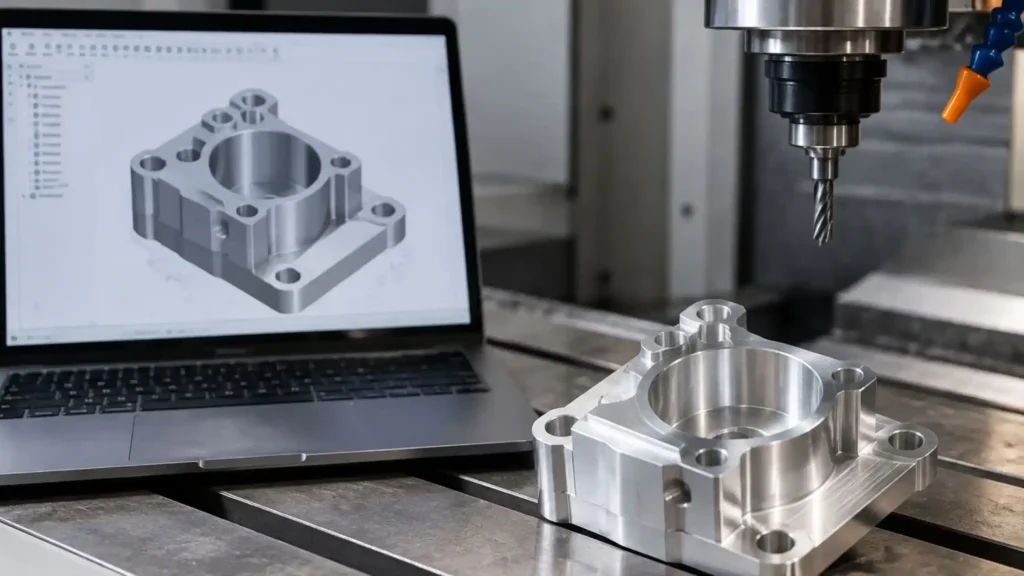
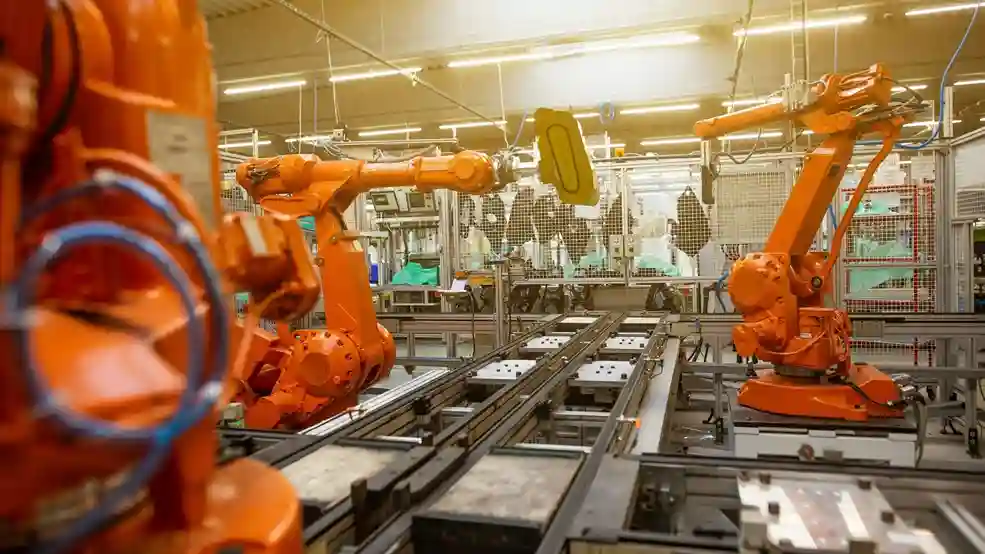
Aerospace manufacturing runs on precision. A single out-of-tolerance bracket can ground an aircraft program or delay a satellite launch by months. CNC machining has become the manufacturing method aerospace OEMs, Tier 1 and Tier 2 suppliers, and defense contractors trust to hit these tolerances consistently, batch after batch.
Among all cnc machining industries, aerospace carries the strictest quality bar. Aircraft structures, engine components, and satellite housings are governed by standards like AS9100D, and even minor dimensional deviations outside AS9100D-specified tolerances can trigger a full batch rejection.
Aerospace-grade CNC suppliers exist to close exactly this gap — sourcing precision-machined parts that meet these standards without the delays typical of overseas sourcing.
Table of Contents
- What Is CNC Machining in Aerospace Industry?
- Why Is CNC Machining Essential for Aerospace OEMs?
- How Does CNC Machining Improve Aerospace Component Manufacturing?
- Why Do Lightweight Aerospace Components Matter?
- What Does 5-Axis CNC Machining Enable for Aerospace Production?
- How Does Localization in India Solve Aerospace Supply Chain Challenges?
- What Should You Look for in a Precision CNC Machining Partner for Aerospace?
- Why Do Aerospace Manufacturers Choose Venttup?
- Key Takeaways
- Conclusion
- Frequently Asked Questions
What Is CNC Machining in Aerospace Industry?
CNC machining in aerospace industry refers to computer-controlled subtractive manufacturing used to produce aircraft, spacecraft, and defense components from solid billet material. A CAD file drives the toolpath, and the machine removes material to hold tolerances that manual machining cannot repeat at scale.
Aerospace parts commonly produced through CNC machining include:
- Aircraft structural brackets and fittings
- Engine housings and turbine components
- Landing gear assemblies
- UAV and drone frames, motor mounts, and sensor housings
- Aerospace-grade fasteners
- Satellite structural panels and thermal management parts
- Defense aviation hardware
Manufacturers select aluminum alloys such as 6061-T6 and 7075-T6, titanium Grade 5 (Ti-6Al-4V), stainless steel, and nickel-based superalloys like Inconel 718 because these materials balance strength, corrosion resistance, and weight. Titanium Grade 5 alone offers a strength-to-weight ratio that makes it standard for structural aircraft parts, while Inconel 718 is chosen for components that operate near engine-level temperatures.
Why Is CNC Machining Essential for Aerospace OEMs?
Aerospace OEMs choose aerospace CNC machining because it delivers repeatable accuracy across large production runs. Machining held a 43% share of the global aerospace parts manufacturing market in 2025 (SNS Insider, 2026), making it the single largest production method used for structural, engine, and landing gear components. Tolerances on aircraft components are frequently held to ISO 1101 geometric dimensioning standards, and CNC systems reproduce these tolerances consistently across a full production run.
| Requirement | What CNC Machining Delivers |
| Precision | Tolerances to ISO 1101 and AS9100D standards |
| Quality consistency | Repeatable results across production batches |
| Safety | Fewer dimensional defects reaching final assembly |
| Speed | Reduced cycle times through 5-axis setups |
| Flexibility | Suited to both prototype runs and full production |
| Material efficiency | Less scrap versus casting and forging methods |
These advantages matter most to procurement managers who are measured on supplier reliability, not just unit price. A supplier that fails an AS9100 audit or misses a delivery window creates downstream risk across an entire aircraft program.
How Does CNC Machining Improve Aerospace Component Manufacturing?
Aerospace component manufacturing depends on tight geometric control across complex part families. CNC machining handles this by cutting intricate geometries – internal cavities, compound curves, thin-wall structures – that casting and manual milling struggle to reproduce consistently.
5-axis CNC machines complete multiple faces of a part in a single setup. Fewer setups mean fewer chances for fixturing error, which directly improves dimensional consistency across a production run.
Measurable outcomes from this CNC-driven approach include:
- Tighter surface finish control, often to ISO 4287 Ra 1.6 μm class finishes on critical surfaces
- Reduced first-article rejection rates through single-setup machining
- Shorter cycle times on complex geometries versus multi-operation manual processes
- Higher repeatability across long production runs
- Fewer inspection escapes reaching final assembly
Why Do Lightweight Aerospace Components Matter?
Weight reduction remains one of the top engineering priorities in aircraft design. Every kilogram removed from an airframe lowers fuel burn across the aircraft’s operating life, which is why aerospace engineering teams push for lightweight aerospace components without sacrificing structural margin.
Aluminum alloys – Grades like 7075-T6 and 6061-T6 deliver a high strength-to-weight ratio and remain the default choice for airframe brackets, panels, and structural fittings.
Titanium alloys – Ti-6Al-4V (Grade 5) combines high strength with corrosion resistance and is standard for landing gear components, fasteners, and structural parts exposed to fatigue loading.
Nickel-based superalloys – Inconel 718 and similar alloys hold mechanical properties at elevated temperatures, making them the material of choice for engine and exhaust-adjacent components.
CNC machining lets engineers remove material precisely from these alloys, pocketing and thinning structures where load allows while preserving strength where it’s needed. This capability supports pure weight-optimization work that casting and stamping cannot match at the same tolerance level.
What Does 5-Axis CNC Machining Enable for Aerospace Production?
Multi-axis CNC machining lets manufacturers reach part geometries that a 3-axis machine cannot cut in one setup. Curved surfaces, deep pockets, and angled bores that intersect from multiple directions are common on structural aerospace parts, and each of these features normally requires a separate repositioning step on simpler equipment.
5-axis CNC machining approaches the workpiece from nearly any angle in a single clamping, which is what makes these compound geometries machinable at production volume rather than one-off. This capability matters most on parts where a 3-axis or 3+2 setup would require multiple fixtures and custom tooling just to reach every face.
Manufacturing engineers evaluating a 5-axis CNC machining partner should look for:
- Simultaneous 5-axis capability, not just 3+2 indexed positioning
- Proven throughput on titanium and Inconel, not just aluminum
- In-house CMM inspection to verify geometric tolerances before shipment
- Documented process control tied to AS9100 requirements
Engine components, structural airframe parts, and UAV motor housings are among the aerospace components that depend most heavily on multi-axis machining capability.
How Does Localization in India Solve Aerospace Supply Chain Challenges?
Global aerospace OEMs are actively applying a China+1 sourcing strategy, and India has become one of the primary beneficiaries of that shift. Government programs such as Make in India have accelerated investment in domestic aerospace manufacturing infrastructure, giving procurement teams a qualified alternative to import-dependent supply chains.
For sourcing professionals, the pain points of overseas sourcing are familiar: long lead times, customs delays, limited supply chain visibility, and currency-driven cost volatility. Localized precision machining in India directly addresses each of these:
- Shorter lead times without ocean freight or customs clearance delays
- Direct engineering collaboration during design-for-manufacturing reviews
- Lower landed cost versus imported components
- Reduced exposure to single-region supply chain disruption
- Faster response to engineering change orders
Aerospace OEMs and Tier 1 and Tier 2 suppliers evaluating this shift can identify qualified Indian manufacturing partners for precision CNC-machined aerospace parts, supporting localization and import-substitution initiatives without compromising AS9100-aligned quality requirements.
What Should You Look for in a Precision CNC Machining Partner for Aerospace?
Selecting a CNC machining industry partner for aerospace work affects program timelines, part quality, and long-term supply chain stability. Procurement teams and sourcing professionals evaluating suppliers should assess these factors directly rather than relying on marketing claims:
- Aerospace manufacturing experience – prior work on structural, engine, or flight-critical components, not just general industrial parts.
- Quality management systems – active AS9100D and ISO 9001 certification, not certification “in progress”.
- Multi-axis machining capability – confirmed simultaneous 5-axis capacity for complex geometries.
- Material expertise – documented experience machining titanium, Inconel, and aerospace-grade aluminum, not just mild steel and standard alloys.
- Inspection infrastructure – in-house CMM and first-article inspection reporting.
- Production scalability – capacity to move from prototype quantities to full production runs without re-qualification delays.
- Supply chain reliability – traceability records covering material certs, process routing, and inspection history.
Why Do Aerospace Manufacturers Choose Venttup?
Venttup was built to address the exact pain points aerospace procurement teams face: difficulty finding aerospace-grade CNC suppliers, inconsistent quality from unvetted vendors, and long lead times from overseas sourcing. Venttup connects aerospace OEMs, Tier 1 and Tier 2 suppliers, and defense and aviation companies with qualified Indian manufacturing partners capable of AS9100-aligned precision component production.
For manufacturing engineers and product development teams evaluating a new supplier relationship, Venttup provides:
- Vetted access to manufacturing partners experienced in titanium, Inconel, and aerospace aluminum
- Support through localization and China+1 sourcing transitions
- Coordination on tight-tolerance, multi-axis CNC machining projects
- A single point of contact for quoting, quality documentation, and delivery tracking across precision aerospace machining programs
Key Takeaways
- Machining accounted for 43% of the global aerospace parts manufacturing market in 2025 (SNS Insider, 2026), ahead of every other production method.
- AS9100D and ISO 9001 certification are non-negotiable baseline checks for any aerospace CNC supplier – a partner without both carries audit risk for the buyer.
- Titanium Grade 5, Inconel 718, and aluminum grades 6061-T6/7075-T6 dominate aerospace part production because each solves a different weight, strength, or heat-resistance problem.
- Simultaneous 5-axis machining, not 3+2 indexed positioning, is the capability gap that separates aerospace-grade suppliers from general job shops.
- The China+1 sourcing shift and India’s Make in India program are making localized Indian manufacturing a practical alternative to overseas supply chains, not just a cost play.
- Procurement risk in aerospace sourcing comes down to seven checkable factors — experience, certification, machining capability, materials, inspection, scalability, and traceability.
Conclusion
CNC machining has become foundational across cnc machining industries, and nowhere is that more true than in aerospace. It enables the tight tolerances, lightweight structures, and repeatable quality that aircraft, UAV, defense, and satellite programs require, while giving procurement teams a way to reduce dependency on volatile overseas supply chains.
As aerospace programs expand across commercial aviation, defense, UAVs, and space technologies, demand for precision aerospace CNC machining will keep growing. Buyers who need a manufacturing partner that understands both the engineering requirements and the localization pressures shaping the industry today will find the right fit by evaluating suppliers against the criteria above.
Frequently Asked Questions
1. What certifications should aerospace machining suppliers hold?
Aerospace-grade CNC suppliers should hold AS9100D certification at minimum, along with ISO 9001. Buyers should verify that partners hold both certifications outright, rather than accepting vendors whose certification is “in process.”
2. Can CNC machining support aerospace prototyping?
Yes. CNC machining produces functional prototypes from the same production-grade material as the final part – titanium, Inconel, or aerospace aluminum – so engineering teams can validate fit, form, and function before committing to full production tooling.
3. How does CNC machining support UAV and drone manufacturing?
CNC machining produces lightweight UAV frames, motor housings, sensor enclosures, and mounting brackets where weight savings directly extend flight time. Aluminum 7075-T6 is a common choice for these components.
4. Which aerospace parts get outsourced to CNC machining partners most often?
Structural brackets, engine housings, landing gear components, heat sinks, and precision fittings are the parts most frequently outsourced, largely because they require tight tolerances that in-house capacity often can’t absorb at volume.
5. What role does CNC machining play in satellite manufacturing?
CNC machining produces satellite structural panels, sensor housings, and thermal management components that must hold dimensional accuracy while surviving extreme temperature swings in orbit.
6. How does India’s aerospace manufacturing ecosystem compare on cost and lead time?
Indian precision machining partners typically offer shorter lead times than overseas suppliers reliant on ocean freight, along with lower landed costs – a major driver behind the current China+1 sourcing shift.
7. What factors drive the cost of aerospace machining?
Several factors influence machining costs, including the selected material, component complexity, required tolerances, processing time, finishing operations, inspection standards, and batch size. Titanium and Inconel machining typically costs more than aluminum due to slower cutting speeds and tool wear.
8. Is CNC machining viable for low-volume aerospace production?
Yes. Because CNC machining doesn’t require dedicated tooling, it’s well suited to prototypes, low-volume production runs, and specialized aviation parts where casting or forging tooling costs wouldn’t be justified.
9. How are aerospace CNC-machined parts inspected?
Trusted manufacturers verify each component using Coordinate Measuring Machines (CMM), laser scanning systems, and first-article inspection (FAI) reports to ensure compliance with ISO 1101 geometric tolerances before delivery.
10. Why does supply chain traceability matter in aerospace manufacturing?
Traceability ties material certificates, process records, and inspection data to each part batch. It’s a requirement for AS9100 compliance and becomes critical if a quality issue needs to be traced back to its source.